
Hot Patch vs Cold Patch for Parking Lot Pothole Repair
November 7, 2026 by Charles Hoffman
Cold patch is the fast fix for small potholes, and hot patch holds up better on big, busy repairs. Here's how to choose the right one for your parking lot.
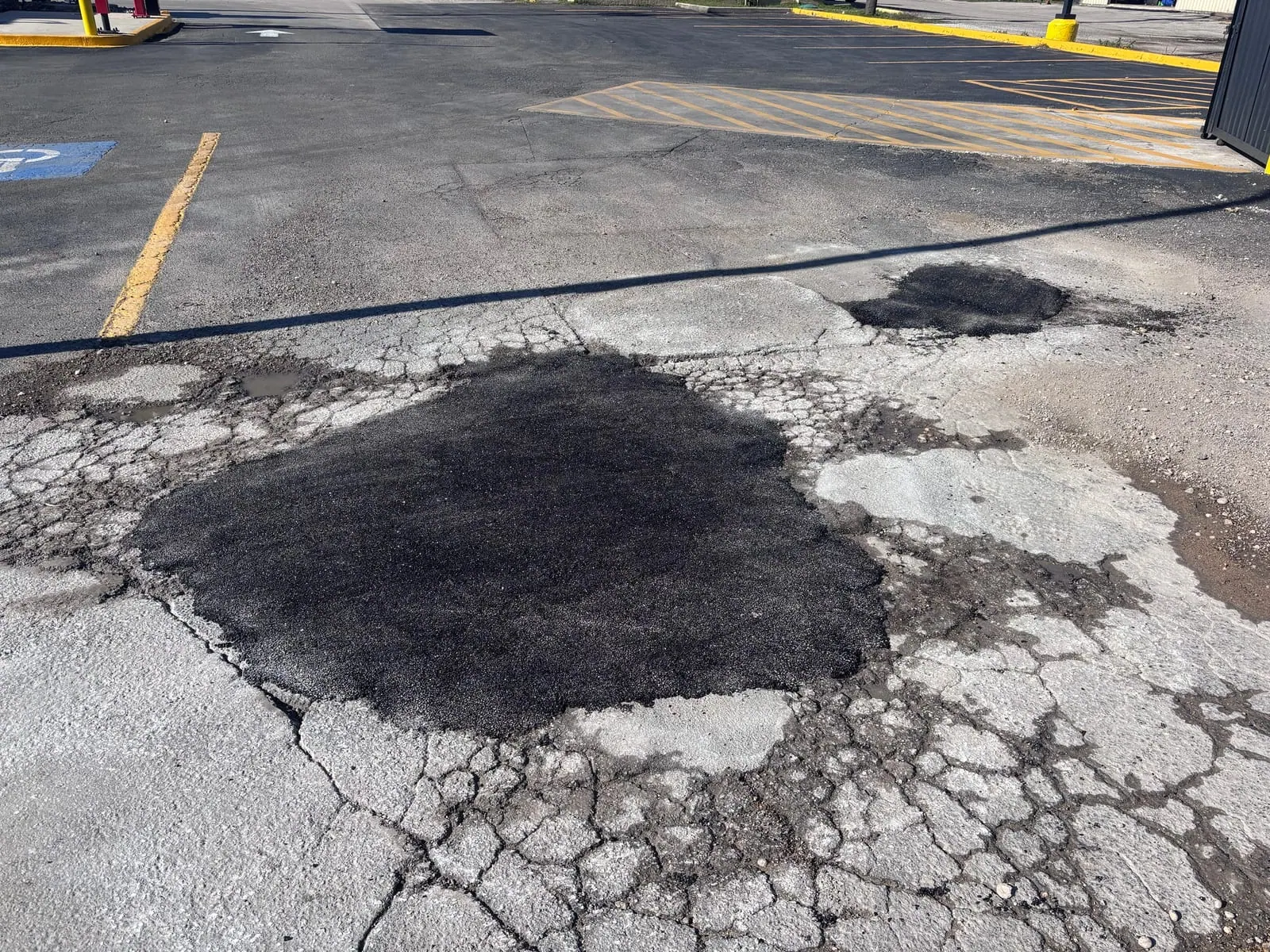
Hot patch is asphalt that's mixed and heated at an asphalt plant, then laid while it's still hot. Cold patch is asphalt that's mixed to stay workable at outdoor temperature, so it can go straight from the bag into the hole.
Both can fix a pothole for good, but they're built for different jobs. If you pick the wrong one for the spot, you'll likely end up paying to patch the same pothole twice.
This guide walks you through how each patch works, how long you can expect it to last, and which one fits the potholes on your lot.
Hot Patch vs Cold Patch: The Difference
Hot Patch (Hot Mix Asphalt)
Hot patch is the same hot mix asphalt that new parking lots and roads are paved with. It's made at a plant by heating the asphalt binder and the rock together, and it has to be spread and compacted before it cools, since cooled hot mix won't pack down tightly.
When hot mix is laid against clean, solid edges, it bonds to the pavement around it and becomes part of the surface. That bond is what allows it to hold up under heavy and turning traffic.
Cold Patch (Cold Mix Asphalt)
Cold patch is asphalt that's mixed so it stays loose at outdoor temperature, which is why you can buy it in bags and store it until you need it. It goes into the hole cold, gets packed down with a plate compactor, and keeps firming up over the following weeks as it cures.
Since there's no plant run and no race against the clock, cold patch allows you to fix a pothole the day you find it, in almost any weather. You can also open the area back up to cars right away.

How Long Each One Lasts
Hot patch is the longer-lasting repair on most lots, because hot mix bonds to the edges of the hole instead of just sitting in it. On a big repair or a busy spot, that bond is the difference between a patch you forget about and one you see again next year.
A cold patch can last a long time too, as long as it's in the right spot and the hole was prepared well. In a parking stall, where cars pull in slowly and sit, a well-compacted cold patch holds up fine; at an entrance, where every car turns across it, the same patch tends to loosen and push out.
When Cold Patch Is the Right Call
Cold patch is usually the better choice when:
- The pothole is small or medium. A few square feet of damage doesn't justify the setup a hot mix repair takes.
- Your lot needs to stay open. Only the area around each pothole gets coned off, and you can drive on a cold patch repair the same day.
- The weather won't cooperate. Cold patch can go down in rain and cold weather, when hot mix work has to wait.
- The traffic is light. Parking stalls and quiet corners are where cold patch does its best work.
If you've got a handful of potholes scattered across your stalls, cold patch allows you to fix all of them in one visit without shutting anything down.
When Hot Patch Is Worth It
Hot patch costs more to set up, but it's worth it when the repair is large or the traffic is heavy. That usually means wide broken areas, entrances and driveways, and the spots where delivery trucks turn.
The tradeoff is time and planning. A hot mix repair takes a trip to the asphalt plant and a crew that works fast before the mix cools, so it makes the most sense when you have enough area to repair at once.
Why Prep Matters More Than the Material
The material gets most of the attention, but the prep work decides how long a patch lasts more than anything else. A patch packed against crumbling edges breaks apart along with them; it doesn't matter whether the patch is hot or cold.

Whichever patch you use, a repair that lasts needs four things:
- Cut out the broken asphalt. Saw-cutting around the pothole down to the base gives the patch solid pavement on every side instead of loose chunks.
- Clean out the hole. Loose rock, dirt and standing water all keep a patch from packing down, so they come out first.
- Fill and compact in layers. A deep pothole gets filled and compacted a few inches at a time, because packing it all at once leaves a soft bottom that sinks later.
- Leave cold patch slightly high. Cold patch goes in a little above the surrounding pavement, since it packs down under the compactor and under traffic.

When Neither Patch Will Last
If the pavement around a pothole is covered in small connected cracks that look like alligator skin, the base underneath has usually failed. Water has softened the ground under the asphalt, and the surface is breaking up because nothing solid is holding it.
A patch on top of a failed base won't last, hot or cold, because the problem is under it. That area needs to be dug out and rebuilt from the base up, and you'll hear it from us if that's what we find when we measure your lot.
How the Two Compare on Cost
Cold patch is the lower cost on small potholes, because there's no plant run and the work goes quickly. Each cold patch repair is priced by its size and depth, and every pothole gets its own line on your quote, so you can see exactly what you're paying for.
Hot patch costs more up front, and it's quoted by the area being repaired. On a large or busy repair, though, it's often the lower cost over time; you're not paying to patch the same spot again a season later.
Choosing the Right Patch for Your Lot
If your potholes are small and spread out across your parking stalls, cold patch is the fast, affordable fix. If you're dealing with a large broken area, or the damage is where cars and trucks turn all day, hot patch is the repair that holds up.
Most lots end up with a mix of both, and that's fine. Our pothole repair service covers cold patch and hot patch, and if you're also planning a restripe, both can go on the same quote. When you request a free quote, we measure every pothole on your lot and tell you which repair each one needs.


